Whispers of Time: Tracing Kyoto’s Ancient Stones Where Every Step Echoes Centuries Past
Discover the soul of Japan in quiet moments between temple visits and garden strolls, where history breathes in every leaf and lantern light.
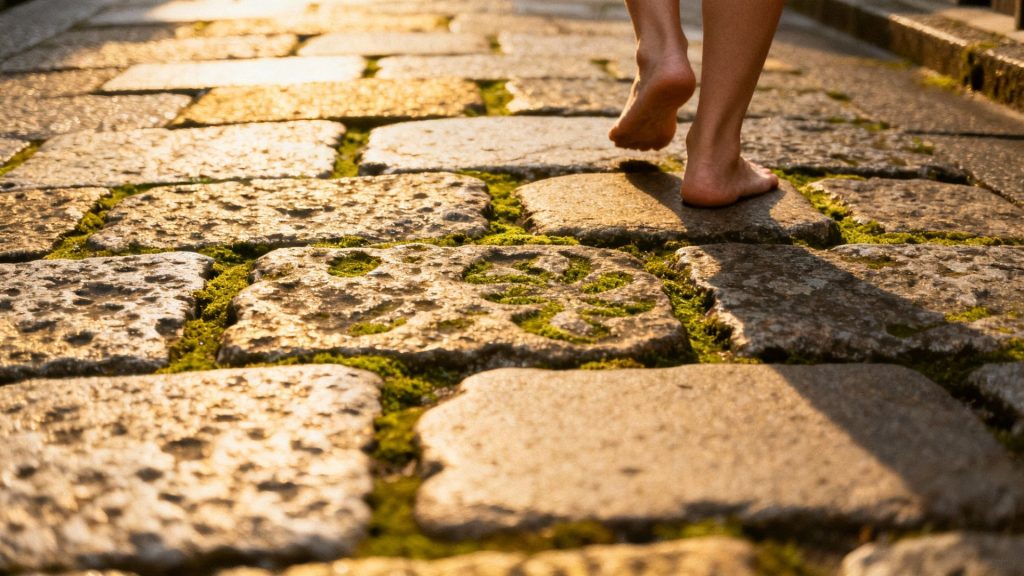
As dawn breaks over Kyoto, a soft mist rises from the Kamo River, wrapping the city in a veil of silver that transforms ancient wooden structures into silhouettes of memory. The air carries the faint scent of incense from distant shrines, mingling with the cool dampness of dew on moss-covered stones. In this hushed hour, the city feels less like a destination and more like a living archive, where the past whispers through the rustle of bamboo and the distant chime of temple bells. It is a moment suspended, inviting you to step into a world where time flows not in hours, but in the slow unfurling of seasons.
At the heart of this experience lies the Golden Pavilion, Kinkaku-ji, its gilded facade shimmering on the still surface of a mirror pond. Surrounded by meticulously raked gravel gardens and towering pines, the pavilion stands as a testament to harmony between human artistry and nature’s grandeur. Here, the play of light shifts with the sun’s arc, casting reflections that dance like liquid gold, evoking a sense of permanence amid transience. The structure’s design, rooted in Zen principles, speaks of a culture that finds beauty in imperfection, where weathered wood and mossy stones are not flaws but cherished markers of age.
This reverence for the ephemeral extends to Kyoto’s spiritual core, embodied in the quiet rituals of Ryoan-ji’s rock garden. Fifteen stones, arranged on a sea of white gravel, invite contemplation without a single word spoken. The garden is a canvas for the mind, reflecting a philosophy that sees divinity in simplicity and wisdom in silence. It is a place where visitors instinctively lower their voices, drawn into a shared human quest for meaning. The stones, worn smooth by centuries of rain and wind, embody resilience, reminding us that history is not just recorded in texts but etched into the land itself.
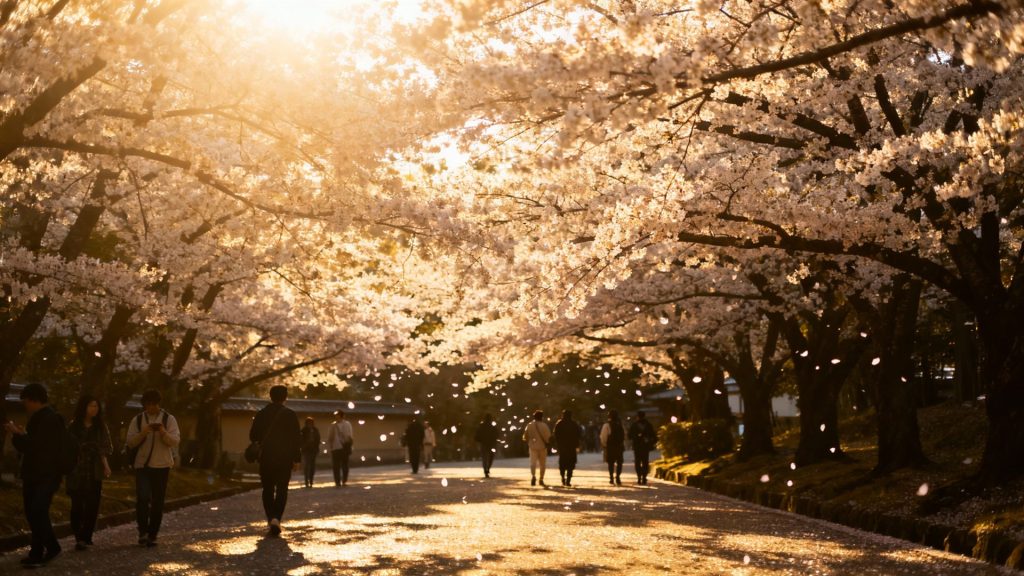
As seasons turn, Kyoto transforms with a painter’s precision. In spring, cherry blossoms burst into clouds of pink along the Philosopher’s Path, their petals drifting like confetti on canal waters. By autumn, the same paths blaze with maples in fiery hues of crimson and gold, casting long shadows that deepen the sense of timelessness. Winter brings a hush, with snow dusting temple roofs and gardens, creating a monochrome world where every footprint tells a story. These cyclical shifts are not mere spectacles but invitations to witness the earth’s gentle rhythm, stirring memories of childhood wonder in those who pause to observe.
To fully immerse, engage the senses: walk barefoot on cool tatami mats in a quiet teahouse, letting the texture ground you in the present. Listen for the wind’s song through bamboo groves in Arashiyama, a natural symphony that soothes the mind. Breathe in the earthy aroma of matcha during a traditional tea ceremony, where each sip connects you to generations of ritual. Avoid crowded hours; instead, seek the solitude of early morning or late afternoon, when light slants low and the city’s pulse slows, allowing personal reflections to surface unbidden.
In the end, a journey through Kyoto is less about seeing and more about remembering—a dialogue between traveler and terrain that awakens dormant recollections of simpler times. The city’s enduring landscapes serve as mirrors, reflecting our own stories back to us, and in that shared silence, we find a universal truth: that travel, at its best, is a return to the self through the world’s quiet beauty.