Whispers of Kyoto: Ancient Stones and Blossoms in Timeless Harmony
Where Every Path Leads to Centuries of History, and Nature’s Brushstrokes Paint the Soul of Japan
As dawn breaks over Kyoto, a soft mist curls around the silhouettes of ancient temples, weaving through cedar forests like a ghostly veil. The air hums with the distant chime of temple bells, their vibrations sinking into the stillness, while the first light catches the dew on moss-covered stones, turning the city into a watercolor dream. Here, time seems to pause, inviting you to breathe in the scent of damp earth and incense—a sensory overture that transports you instantly into a world where past and present merge. This is not just a place; it’s an immersion into tranquility, where the weight of centuries rests gently on the landscape, and every step feels like a rediscovery of something profoundly familiar, yet eternally new.
At the heart of this serenity stands Kinkaku-ji, the Golden Pavilion, its reflection shimmering in the mirror-like pond like a fragment of sunlit amber. Bamboo groves whisper secrets along the pathways of Arashiyama, their slender stalks swaying in unison, creating a cathedral of green that filters sunlight into dappled patterns on the forest floor. Each structure, from the vermilion gates of Fushimi Inari to the wooden simplicity of Kiyomizu-dera, is a testament to human artistry entwined with nature. These landmarks are not mere monuments; they are living canvases where the play of light and shadow reveals the city’s soul, with every curve and contour telling tales of resilience and reverence etched into the land.
Kyoto’s essence lies in its seamless fusion of culture and environment, where the principles of wabi-sabi—the beauty of imperfection and transience—are woven into daily life. In the quiet corners of Zen gardens, raked gravel mimics ocean waves, symbolizing the eternal flow of existence, while tea ceremonies in historic tea houses honor mindfulness and harmony. The architecture, with its sloping roofs and paper screens, is designed to frame the seasons, blurring the lines between indoors and out. This is a city that breathes with intention, where tradition isn’t preserved in glass but flourishes in the rhythm of quiet rituals, reflecting a philosophy that finds peace in simplicity and depth in silence.
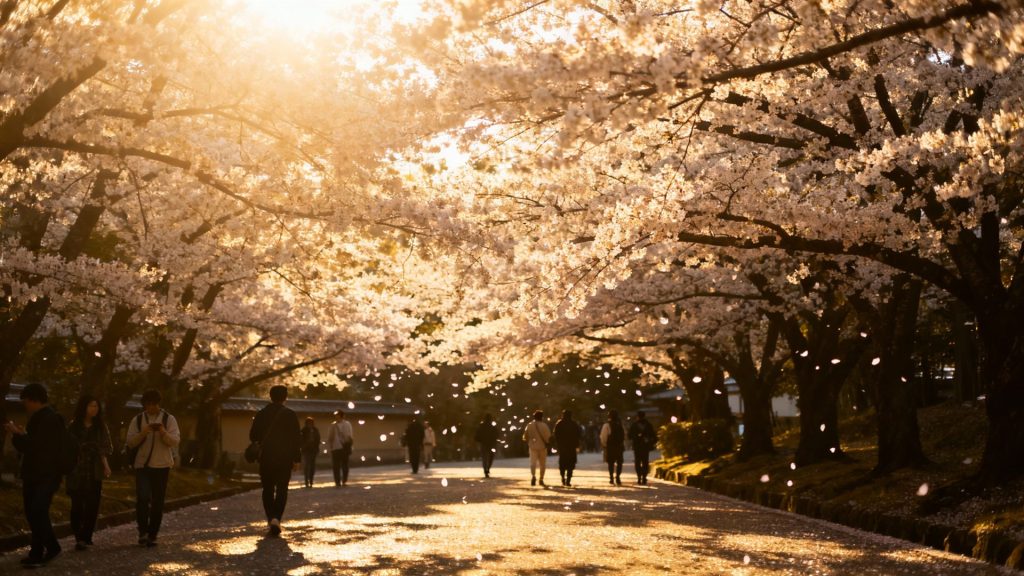
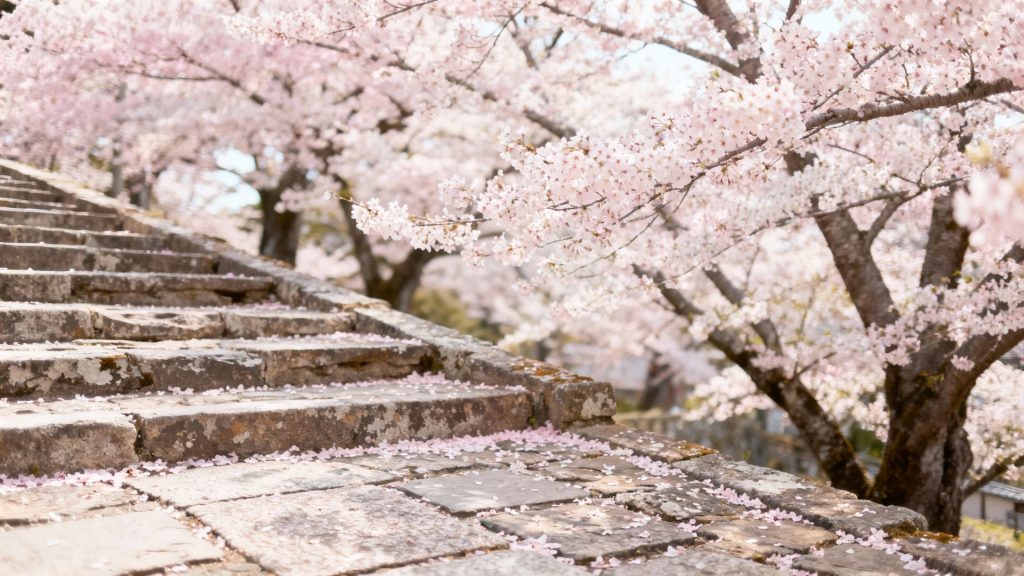
Seasons unfurl here with poetic grace, each painting the city in a new palette of emotions. Spring erupts in a cascade of cherry blossoms, delicate petals drifting like pink snow over stone pathways and rivers, evoking a fleeting joy that lingers in memory long after the blooms fade. Autumn transforms the hillsides into fiery tapestries of maple leaves, casting a golden glow over temple courtyards, while winter dusts the gardens in soft white, turning them into meditative havens. Even the hushed tones of summer evenings, when fireflies dance in hidden glens, offer moments of introspection. These shifts remind us that beauty is ephemeral, yet Kyoto masterfully captures it, inviting us to witness the cycle of renewal and decay as a timeless dance.
To experience Kyoto is to engage all senses: wander the Philosopher’s Path as cherry blossoms rain down, the crunch of gravel underfoot a rhythmic counterpoint to birdsong. Pause in a garden to hear the trickle of water from stone basins, a sound that soothes the mind, while the earthy aroma of matcha tea from a nearby ceremony drifts on the breeze. Touch the cool, weathered wood of a thousand-year-old shrine, or taste the subtle sweetness of seasonal kaiseki cuisine, where each dish is a tribute to nature’s bounty. Practical advice? Move slowly, let the city reveal itself; avoid crowds by visiting at dawn or dusk, and allow the textures, scents, and silences to seep into your being, transforming observation into a deeply personal journey.
In the end, Kyoto is a mirror to the traveler’s own memories, not through overt nostalgia but through its ability to awaken dormant echoes of shared human experience. It speaks of continuity—how stones laid centuries ago still hold warmth, and blossoms that bloom for but a week remind us of life’s precious brevity. This city doesn’t demand you remember; it simply exists, an eternal witness to the interplay of time and nature. As you depart, the harmony of its landscapes lingers, a quiet invitation to carry its serenity within, long after the journey ends. Here, the past isn’t a relic; it’s a gentle companion, urging us to find beauty in the now and peace in the passage of all things.