Whispers of Ancient Stones: Where Kyoto’s Gardens Hold Time in Gentle Embrace
Discover the soul of Japan in serene temple grounds and moss-laden paths, where seasonal shifts paint scenes that awaken forgotten memories.
As dawn’s first light filters through the ancient cedars of Kiyomizu-dera, the world hushes into a profound stillness. The air, cool and crisp, carries the earthy scent of damp moss and aged wood, while distant temple bells chime with a resonance that seems to echo through centuries. Below, the city of Kyoto stirs softly, but here on the hillside, time suspends itself in a golden haze. Visitors tread lightly on stone paths worn smooth by generations, their footsteps absorbed by the quiet. In this moment, the garden reveals itself not as a mere arrangement of rocks and plants, but as a living canvas where light dances on raked gravel, shadows stretch like long-forgotten stories, and the very silence hums with the weight of history. It is an immersion into tranquility that bypasses words, awakening a deep, wordless nostalgia for a past one never lived but instinctively recognizes—a sensory embrace that pulls you into Kyoto’s timeless heart.
Step into the Arashiyama Bamboo Grove, and you enter a verdant cathedral where towering stalks rise like emerald pillars, their slender forms swaying in unison to a breeze that whispers secrets only nature understands. Sunlight pierces the canopy in slender beams, casting dappled patterns on the forest floor and illuminating the path ahead with an ethereal glow. The rustle of leaves creates a symphony of soft sounds, a natural rhythm that soothes the mind and heightens awareness of every breath. This is not just a landscape; it is a testament to scale and serenity, where the sheer height of the bamboo induces awe, and the enveloping greenness washes over you like a balm. Here, amidst the quiet grandeur, one feels both insignificant and profoundly connected—a reminder of humanity’s place in a vast, enduring world, where beauty thrives in simplicity and the passage of time is marked not by clocks but by the gentle growth of each stem toward the sky.
Kyoto’s gardens are more than aesthetic marvels; they embody a philosophy of harmony between human endeavor and the natural world, cultivated over centuries of Zen tradition. In the rock gardens of Ryoan-ji, fifteen stones sit amidst oceans of raked gravel, their arrangement an enigmatic puzzle that invites contemplation. Each element is placed with intention—moss creeping over weathered rocks symbolizes patience, while carefully pruned pines represent resilience against the elements. These spaces teach that true beauty arises not from control, but from coexistence: the way a stone lantern weathers gracefully with age, or how a koi pond mirrors the changing sky, reflects a deep respect for impermanence. This dialogue between culture and nature speaks to a universal longing for balance, evoking memories of childhood explorations in wild places, where every hidden nook felt like a discovery. It is a silent education in mindfulness, where the garden’s stillness becomes a mirror for inner peace, stirring emotions that resonate with the shared human experience of seeking solace in the earth’s enduring rhythms.
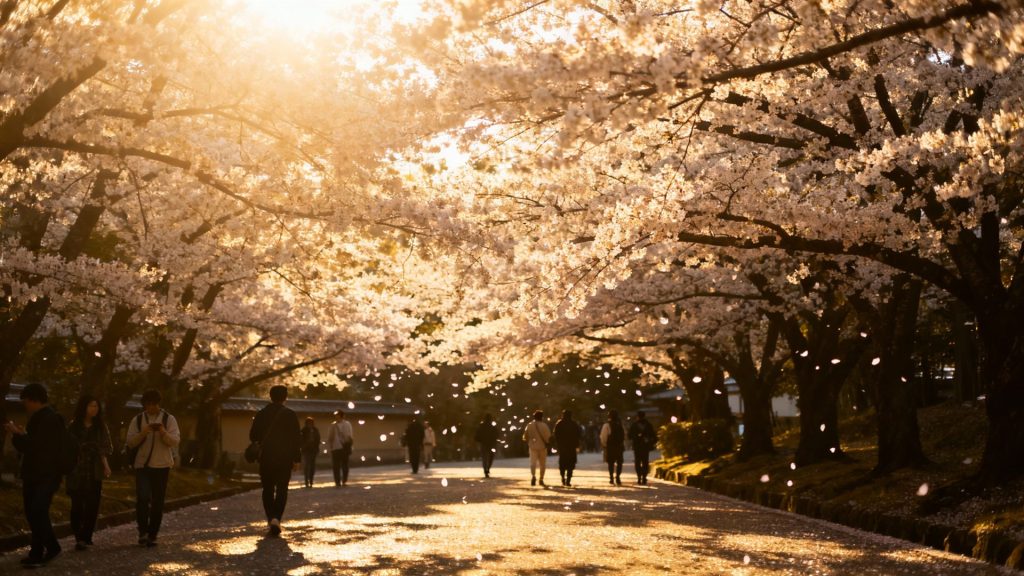
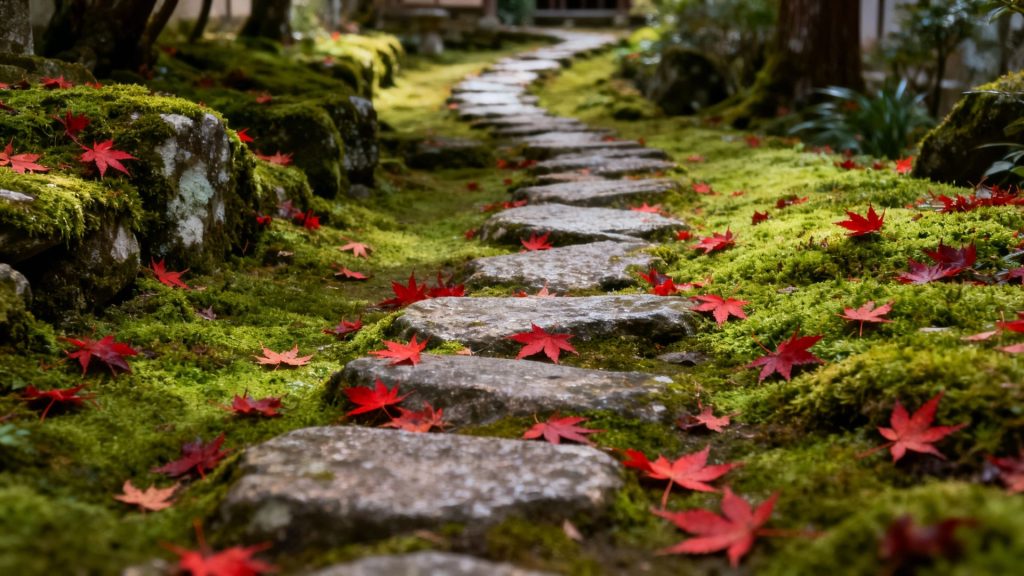
With the turning of seasons, Kyoto undergoes a metamorphosis that deepens its nostalgic pull. Spring arrives in a blush of cherry blossoms, transforming temple courtyards into clouds of pale pink, each fleeting petal a celebration of life’s transience. Summer cloaks the city in lush, vibrant greens, the gardens humming with cicadas and the scent of rain-soaked earth, while ponds shimmer under the midday sun. Come autumn, maples ignite in fiery reds and oranges, their reflections doubling the brilliance in still waters, and the crunch of fallen leaves underfoot adds a tactile layer to the sensory feast. Winter, in its quiet majesty, drapes rooftops and stone statues in a soft blanket of snow, reducing the world to monochromatic serenity, where frost-etched branches stand as stark poetry against gray skies. Each season reinterprets the landscape, not as a disruption but as a natural evolution, reminding us that change is both inevitable and beautiful—a cycle that mirrors our own lives and stirs a longing for the familiar yet ever-new wonders of the natural world.
To wander through Kyoto is to engage in an unspoken conversation with time itself, where each step on a mossy path or pause before a weathered shrine becomes a meditation on existence. The city’s gardens and temples do not merely offer escape; they forge a connection, inviting travelers to slow down, observe, and reflect. In the interplay of light on water or the symmetry of a stone arrangement, one finds echoes of personal memories—perhaps of a grandparent’s garden or a solitary walk in the woods—that surface unbidden, bridging distances between past and present. This journey culminates not in grand revelations but in quiet epiphanies: that in stillness, we discover movement; in simplicity, profound depth; and in nature’s cycles, a comforting constancy. Kyoto, in its gentle wisdom, teaches that travel is not just about seeing new places, but about rediscovering parts of ourselves we had forgotten, leaving us with a sense of belonging that lingers long after departure, like the faint scent of pine on a morning breeze.