Whispers in Water-Stone: Where Gondolas Trace Memory Lines on Liquid Canvas
A Journey Through Venice’s Timeless Labyrinth, Where Dawn’s First Light Awakens Centuries in Rippled Reflection
Morning mist rises like breath from the canals, dissolving the boundaries between water and stone. Your footsteps echo on damp flagstones as a gondolier’s oar breaks the silver surface, the rhythmic splash syncopating with church bells that have measured time since merchants traded Byzantine silks. Here, the air tastes of salt and history, each crumbling palazzo facade a parchment where sunlight illuminates stories in peeling frescoes and moss-crowned lion reliefs. Venice doesn’t announce its nostalgia; it seeps into your bones through the cool marble beneath your palm, through the way shadows pool in alleyways like spilled ink.
The Grand Canal unfolds as liquid architecture, palaces rising directly from the Adriatic’s embrace. Byzantine arches frame Gothic windows where sunlight fractures into prisms on leaded glass. At water level, emerald algae patterns the foundations – nature’s persistent embroidery on human ambition. Notice how marble steps descend into turquoise depths, how bridges arch like cats’ backs over narrow rii. This is a city built not against water, but in conversation with it, where every building leans as if listening to aquatic secrets whispered through centuries. The very stones seem softened by tidal caresses, their edges blurred like memories revisited.
In hidden campielli, time condenses. A baker’s window reveals dust dancing in sunbeams beside century-blackened brick, the scent of rising dough mingling with brine. At noon, light pierces courtyard wells, illuminating forgotten lion-head fountains where pigeons drink from mossy basins. Observe the silent language of washing lines strung between buildings – vibrant linens fluttering like prayer flags over shadowed canals. This choreography of daily life remains unchanged: the clatter of espresso cups, the swish of broom on stone, the evening ritual when shutters close like eyelids against the lagoon’s exhale. Venice preserves not monuments, but rhythms.
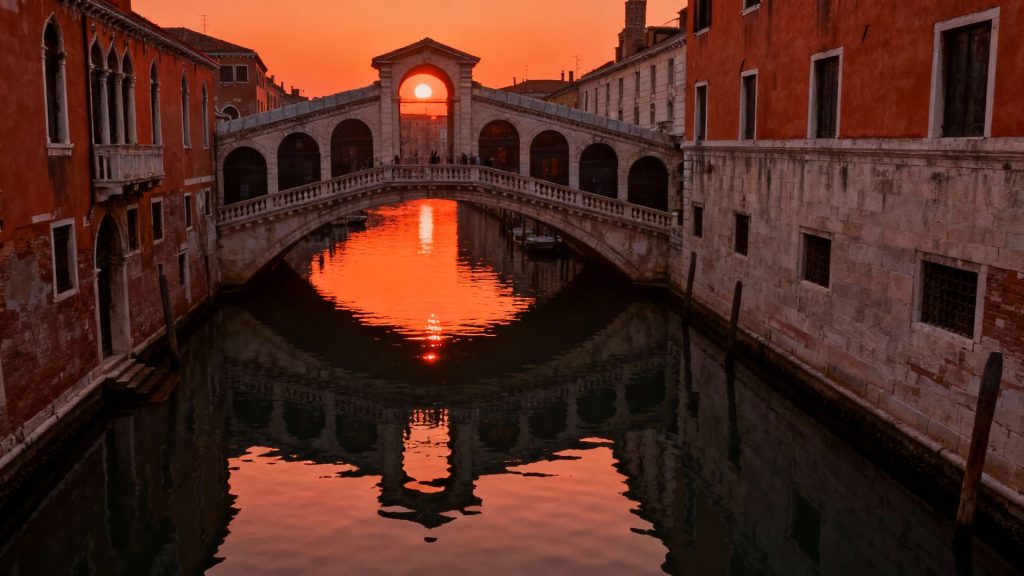
Dusk transforms the city into a chiaroscuro masterpiece. Gas lamps bloom along fondamenta, their amber glow doubling in dark waters. The Rialto’s arches become silhouettes against peach-colored skies while gondolas merge into liquid shadows. Come autumn, acqua alta breathes the Adriatic into marble-floored cafes, creating mirrored ceilings where crystal chandeliers glitter beneath your feet. Winter brings Carnival’s echo – not costumed revelers, but the lingering sense of masks observing from palazzo balconies as frost etects lace patterns on gondola covers. Each season rewrites the city in new light, revealing fresco fragments beneath plaster or sudden vistas when morning fog lifts.
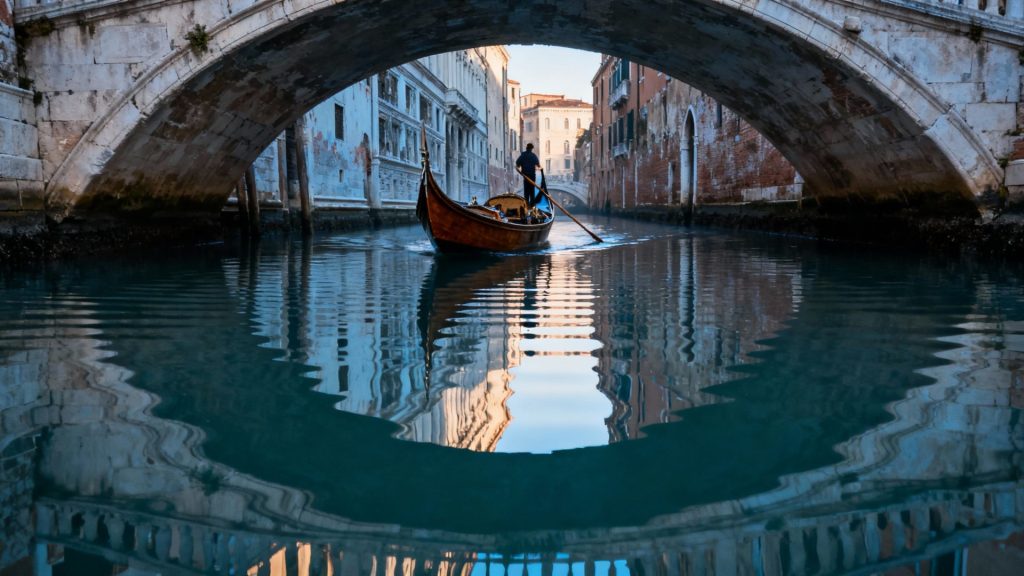
To know Venice is to move with water’s patience. Drift through back-canals where reflections kaleidoscope palace facades, your gondola’s prow parting liquid marble. Run fingers over brickwork textured by salt winds and centuries – each groove a chronicle of high tides. Taste cicchetti in bacari where wooden counters gleam with generations of elbows, the tang of marinated seafood sharp on your tongue. At midnight, stand on Zattere as the city’s hum fades to lapping water, when distant accordion music drifts like smoke over moonlit ripples. These sensations bypass reason, awakening childhood memories of hidden coves or grandmother’s perfume.
Departing Venice feels like closing a cherished journal. The city remains suspended between sea and sky, its beauty inseparable from fragility. Salt-corroded foundations and rising waters speak not of decay, but of persistence – how beauty endures through adaptation. Your footsteps echo long after leaving, carrying the liquid cadence of bridges crossed and the weight of stone touched. Venice becomes less a place visited than a state of being remembered: the way water holds light, how memory lives in the curve of a canal, and why some silences resonate deeper than words.