Whispers in Stone: Kyoto’s Cobbled Alleys Where Time Forgets to Tread
Beneath vermilion gates and rustling maple shadows, ancient pathways hold centuries of silence – inviting footsteps to trace memories not yet formed
Dawn bleeds liquid gold through bamboo lattices, spilling over moss-stitched stone steps leading to Kiyomizu-dera’s hovering veranda. Below the temple’s wooden stilts, the Otawa waterfall murmurs secrets to maple roots, its three crystalline streams carrying prayers from pilgrim lips to moss-cushioned rocks. The air tastes of wet cedar and extinguished incense, clinging to lanterns still warm from night watch. In this suspended hour before crowds descend, Kyoto reveals its true skin: a city breathing through the grain of thousand-year cypress beams, where every warped timber and tea-stain on shoji paper holds the weight of seasons.
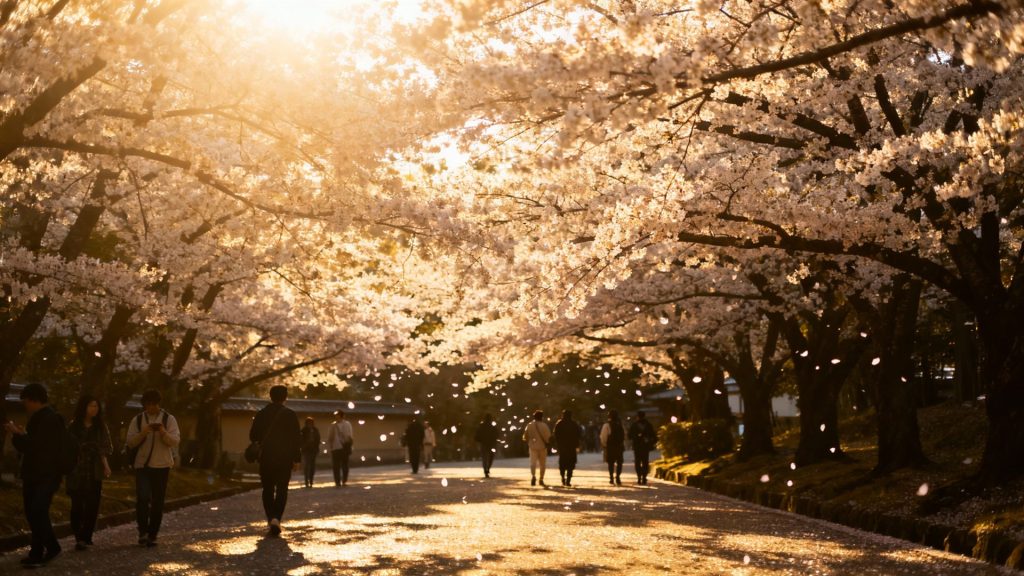
Walk the Philosopher’s Path as cherry petals surrender to wind currents, pink snow gathering in eddies along the canal. Stone Buddhas stand sentinel along the waterway, their serene faces slowly erased by lichen and rain – each erosion line a calendar of winters. The temples here aren’t mere buildings but conversations with topography. Kinkaku-ji’s gold leaf dissolves into pond reflections, its shimmering twin wavering like a mirage where koi brush against submerged history. Notice how wooden pillars lean into hillsides as if listening to the land’s heartbeat, how rock gardens compose mountain ranges in miniature, raked gravel flowing around boulders like time around stubborn memories.
Tea houses materialize in fog-shrouded afternoons, their thatched roofs steaming softly. Inside, tatami mats exhale the scent of rush grass and matcha whisked into jade foam – a ritual unchanged since warlords planned battles over bitter cups. No words break the ceremony’s choreography: bamboo scoop meets ceramic bowl, water sighs into iron kettle, steam ribbons curl toward ceiling beams darkened by centuries of contemplation. This is where Kyoto’s soul resides: not in grand declarations but in the space between a teacup’s rotation, in the hollow where anticipation meets the first bittersweet sip.
Seasons rewrite the city’s palette with monastic precision. Autumn ignites Tofuku-ji’s maples into crimson waterfalls tumbling over stone walls, while Arashiyama’s bamboo forest turns winter sunlight into shattered emerald on frozen paths. Come spring, the fleeting cherry blossoms at Maruyama Park draw nocturnal viewers who picnic under lantern-lit canopies, their joy tempered by sake and the knowledge that such beauty blossoms brightest before falling. These cycles of efflorescence and decay become the city’s quiet philosophy: that impermanence makes moments sacred, that loss carved deepens meaning.
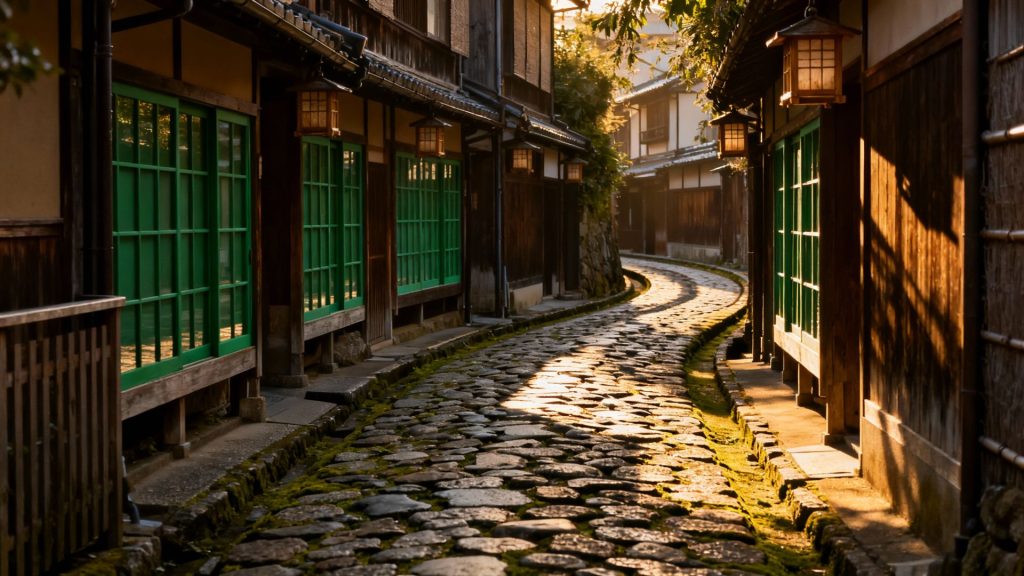
To wander Kyoto’s backstreets at twilight is to enter a living archive. Lanterns flicker awake along Pontocho’s narrow spine, their paper glow revealing restaurant noren curtains stained with decades of woodsmoke. Follow the scent of burning cherry wood to tucked-away ryokans, where wooden baths overlook miniature gardens designed for moon viewing. Footsteps echo differently here – absorbed by earth rather than concrete, each footfall sinking into layers of packed history. What remains is the profound calm of a city that has witnessed empires rise and fade yet preserved stillness in the curve of a tiled roof, the angle of a pruned pine, the way dust motes dance in temple shafts of light. This is nostalgia woven without words: a landscape that resonates deep in the traveler’s bone-memory, where every stone feels remembered.