Where Stone Whispers to Water: Venice’s Liquid Labyrinth Awakens Forgotten Echoes
Amidst Adriatic Tides, Gothic Arches Cast Dancing Shadows on Emerald Canals as Centuries of Salt-Crusted Stories Rise Like Mist
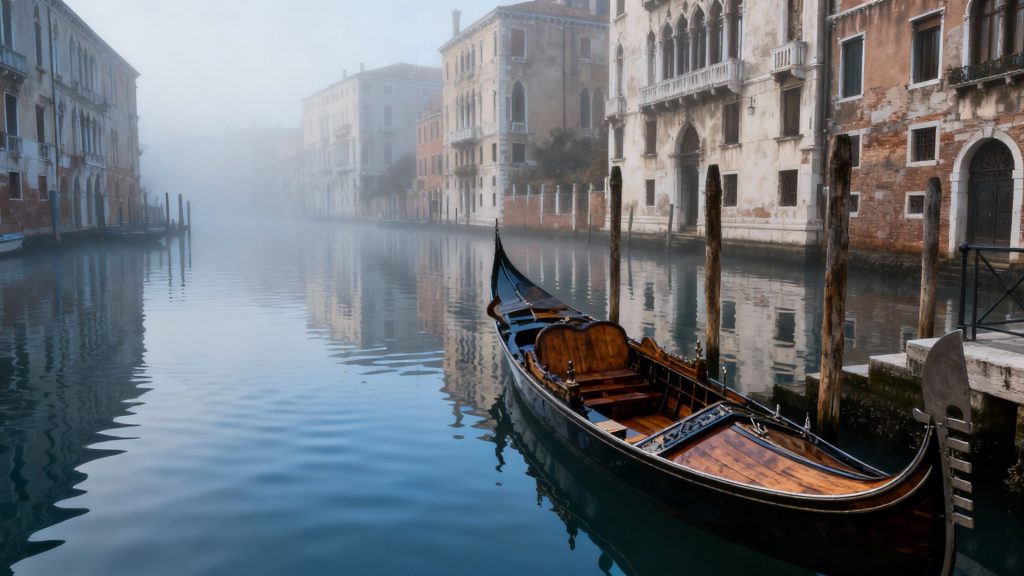
Dawn bleeds gold across the lagoon, gilding terracotta rooftops until they glow like banked embers. The first gondolier’s oar slices green water with a liquid sigh, ripples expanding to kiss crumbling palazzo foundations where seaweed clings like lace. Somewhere, a baker’s window exhales clouds of buttery warmth that tangles with brine and damp stone – an olfactory sonnet older than Marco Polo’s footsteps. Venice doesn’t announce itself; it seeps into your pores through the cool marble beneath trembling fingers, through church bells muffled by morning fog, through the way light fractures on Byzantine mosaics.
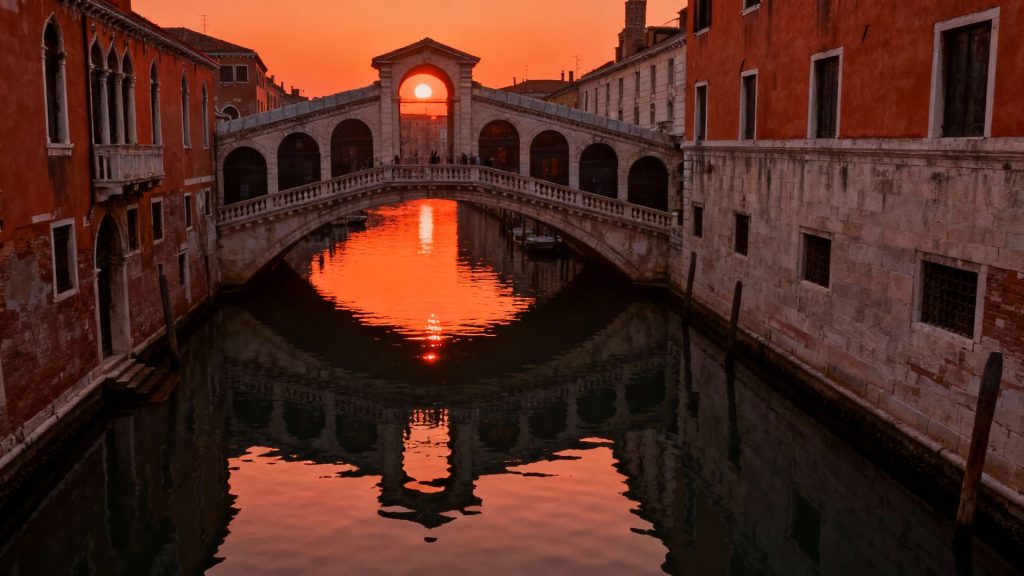
The Grand Canal curves like a liquid spine, bearing witness to palaces wearing their water-stained grandeur with nonchalant grace. Ca’ d’Oro drips with traceries as delicate as frost, its reflection trembling like a mirage. At Rialto, the bridge’s arched shadow cradles floating markets where persimmons blush beside silvered fish – a tableau unchanged since merchants traded silks for spices. Here, architecture isn’t imposed but evolved: foundations deliberately sunken into lagoon mud, Istrian stone resisting salt’s caustic kiss, staircases retreating from acqua alta’s embrace.
Observe how light scripts daily revolutions upon this aqueous stage. Noon sharpens shadows into knife-edges beneath arcades, etching black-and-white patterns on flagstones. By dusk, the entire city becomes a vessel for liquid gold – windows ignite, ripples turn to molten copper, and the Zattere promenade glows as if lit from within. Winter brings different magic: mist erases modern edges, reducing Venice to Gothic silhouettes and the lonely cry of gulls. In such moments, the city feels less built than dreamed into existence.
To navigate Venice is to relearn navigation by instinct. Follow the scent of fried cicchetti down alleys narrowing to shoulder-width, where damp walls press close as confidants. Pause where a courtyard suddenly yawns open, revealing laundry fluttering like medieval flags against azure. Listen: the slap of wavelets on fondamenta, the creak of a mooring rope, the distant aria drifting from an open window – a soundscape woven from water and whispers. Touch matters here; run fingers over marble worn concave by generations, feel the cool kiss of canal spray on sun-warmed skin.
Seek the quiet corners where Venice’s pulse beats strongest. In Cannaregio, sunlight filters through vine-draped pergolas onto deserted squares where cats doze on wellheads. At Libreria Acqua Alta, books sleep in bathtubs and gondolas – paper guardians against the tide. Evenings transform hidden campi into open-air salons, where the clink of prosecco glasses mingles with lapping water. For the truest communion, board a traghetto at twilight: standing shoulder-to-shoulder with locals as the oarsman’s single stroke parts liquid darkness.
Venice asks nothing but presence. It exists in the space between a stone step and its watery echo, in the way afternoon light turns ordinary dust into gold-dust suspended in air. This city isn’t preserved; it persists – a testament to humanity’s dance with entropy. To leave is to carry away not souvenirs, but sensory imprints: the weight of centuries in a weathered door-knocker, the taste of brine on evening air, the certainty that somewhere, always, water still licks at stone in an endless, whispering conversation.