Echoes in Stone and Mist: Kyoto’s Timeless Journey Through Soul and Silence
Discovering Japan’s Ancient Heartland Where Every Temple Path and Bamboo Grove Whispers Tales of Tranquility and Enduring Beauty
As dawn breaks over the Kamo River, the first light filters through gnarled cherry branches, casting a golden glow upon the quiet lanes where centuries of footsteps have worn paths into stone. A gentle mist rises from the water, carrying the faint scent of pine and moss, as if the city itself exhales a breath of ancient wisdom, enveloping all who wander in a cocoon of stillness. The air hums with the distant chime of temple bells, a soft reminder of rituals unchanged by time, and in this moment, the world narrows to the curve of a bridge, the rustle of fallen leaves, and the promise of discovery in every sun-dappled corner.
At Fushimi Inari Shrine, an undulating ribbon of vermilion torii gates climbs the mountain slope, each archway a silent sentinel guarding the passage between worlds. Sunlight slants through the gaps, painting stripes of warmth on the cool stone beneath, while the forest presses in with a lush embrace of bamboo and cedar. Here, the landscape is not merely scenery but a living testament to devotion, where nature and human hand are woven into an intricate dance of shadow and light. The path twists and turns, revealing hidden shrines draped in moss, their weathered carvings telling stories of pilgrims past, and the rustling leaves seem to murmur secrets of resilience and reverence.
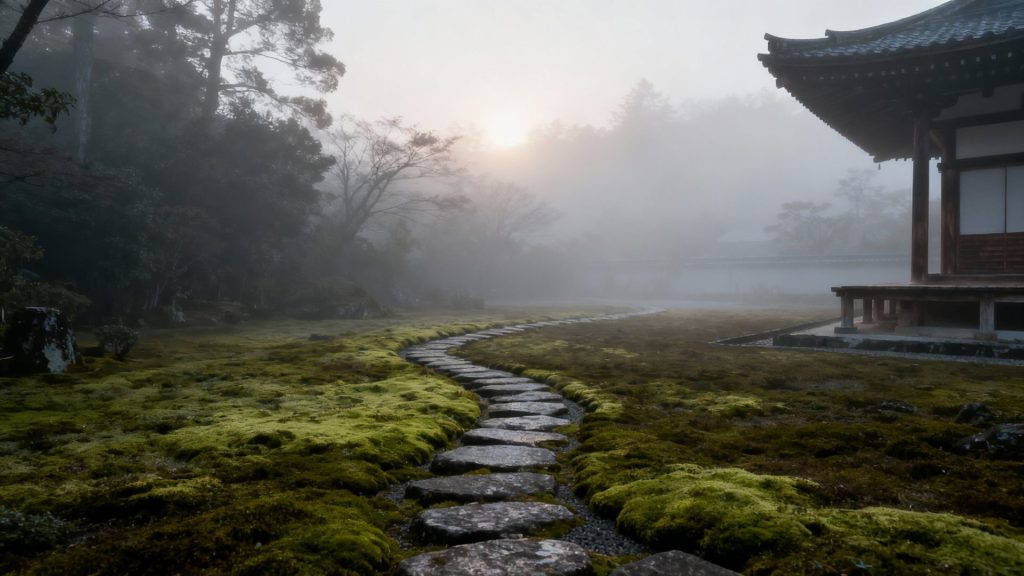
Kyoto’s soul pulses through its gardens and temples, where every stone lantern and raked gravel bed reflects a philosophy of balance and harmony, born from centuries of Buddhist influence. The Kinkaku-ji pavilion shimmers on the edge of a mirror lake, its gilded façade catching the afternoon sun like a beacon of tranquility, while Ryoan-ji’s Zen garden invites contemplation with fifteen stones arranged on a sea of white gravel, an abstract map of the cosmos that calms the restless mind. These spaces are not just monuments but living classrooms, teaching quietude through the symmetry of moss-covered rocks and the way water flows over stone channels, embodying a timeless dialogue between humanity and the earth.
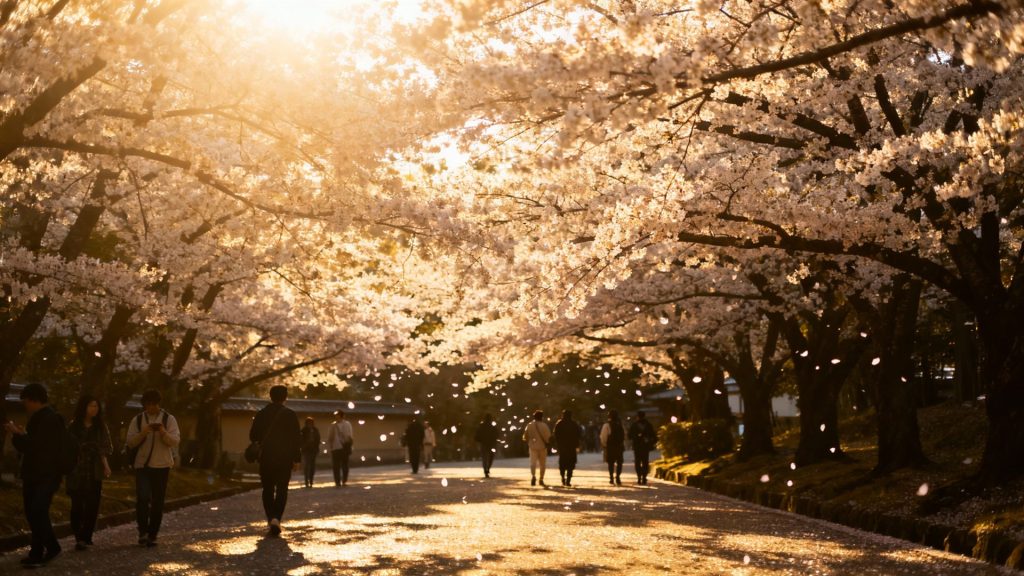
With the turning of seasons, Kyoto transforms its palette: spring unfurls clouds of cherry blossoms, painting the city in soft pinks that drift like snow upon the canals; summer brings emerald forests alive with cicadas’ song; autumn ignites maples into fiery crimsons and golds, carpeting temple courtyards in a blaze of color; and winter drapes all in a hushed blanket of snow, where frost-etched branches frame pagodas in crystalline silence. At dusk, lanterns flicker to life along the Philosopher’s Path, casting long shadows that dance with the fading light, while dawn in Arashiyama reveals bamboo groves where shafts of sun pierce the canopy, creating a cathedral of green that shifts with the morning breeze.
To truly absorb Kyoto’s essence, rise early and walk the quiet streets as the city stirs, feeling the cool kiss of dew on skin and listening to the chorus of birdsong that heralds the day. Pause by a stone garden, letting the mind empty as you trace the patterns in the gravel, or sit by a pond where koi glide like living jewels, their movements a meditation in motion. Taste the simplicity of matcha in a teahouse, its bitter-sweet warmth a ritual of presence, and breathe deep the earthy scents of rain-soaked moss and cedar that linger in hidden courtyards. Each sense is a gateway, opening to the subtle textures of weathered wood, the crunch of gravel underfoot, and the distant echo of chanting that weaves through the air.
In Kyoto, travel becomes a pilgrimage of the heart, a quiet conversation with landscapes that have witnessed empires rise and fall, yet remain anchored in an eternal now. It is in the pause between steps, the shared silence with a stone lantern, or the way a garden path invites introspection, that we find not just beauty, but a mirror to our own fleeting place in the world. Here, the past is not a relic but a companion, walking beside us, reminding us that every journey is a return to the simple, profound truth: that in stillness, we hear the whispers of our own souls.