Whispers of Time: Meandering Through Kyoto’s Serene Alleys Where History Breathes and Memories Unfold
Discover the quiet magic of Kyoto’s ancient temples and gardens, where each stone and leaf tells a story, inviting you to lose yourself in a landscape where past and present merge seamlessly.
Dawn breaks over Kyoto with a hush that settles like dew on moss-covered stones; the air is cool and crisp, carrying the faint scent of incense from distant temples as mist curls around wooden gateways, painting the city in soft, ethereal light. This is a moment suspended in time, where the first rays of sun kiss the golden facade of Kinkaku-ji, transforming the pond’s reflection into a shimmering tapestry that awakens the senses—sight, sound, and soul merging in a silent symphony of serenity. Here, in the heart of Japan’s former capital, the world feels both vast and intimate, a place where the weight of centuries rests gently on the shoulders of those who wander, evoking a deep, unspoken nostalgia that bubbles up not from words, but from the very essence of place.
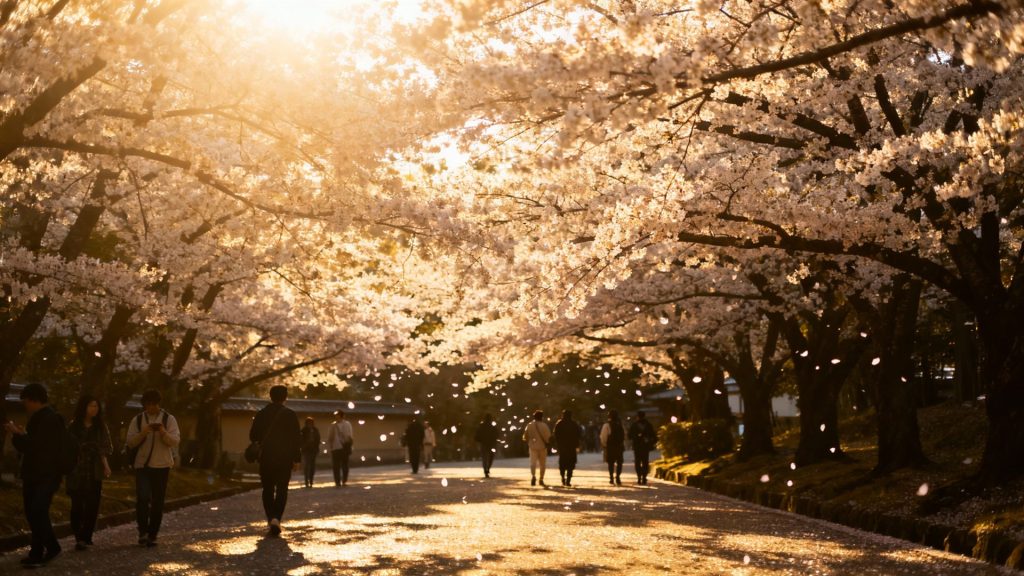
The landscapes of Kyoto unfold like pages of a cherished book, each turn revealing vistas that command reverence: the Arashiyama bamboo grove stands tall and silent, its emerald stalks swaying in a breeze that whispers secrets of the ages, while the Philosopher’s Path traces a curve beside a canal lined with cherry trees, their blossoms in spring a cascade of pink that seems to float on air. These are not mere sights but living canvases, where nature’s grandeur—the scale of mountains against sky, the intricate patterns of rock gardens—speaks of harmony and resilience, grounding the observer in a reality that feels both immediate and eternal. In such settings, the city’s soul reveals itself through contrasts: the delicate dance of light on water, the rugged textures of ancient stone walls, and the profound quiet that amplifies every rustle of leaves, pulling you deeper into a contemplative embrace.
Kyoto’s essence is woven into its traditions, where Zen philosophy infuses every corner, from the meticulous design of Ryoan-ji’s rock garden to the simple elegance of tea houses perched beside streams. The architecture, with its sloping roofs and paper screens, adapts to the seasons, allowing rain to cascade in silver threads and snow to blanket courtyards in white silence, a testament to human ingenuity intertwined with natural rhythms. This is a place where history is not displayed but lived, in the daily rituals of monks chanting at dawn or the careful arrangement of ikebana that mirrors the wild beauty outside, fostering a spirit of mindfulness that invites visitors to shed modern haste and embrace the present with quiet awe.
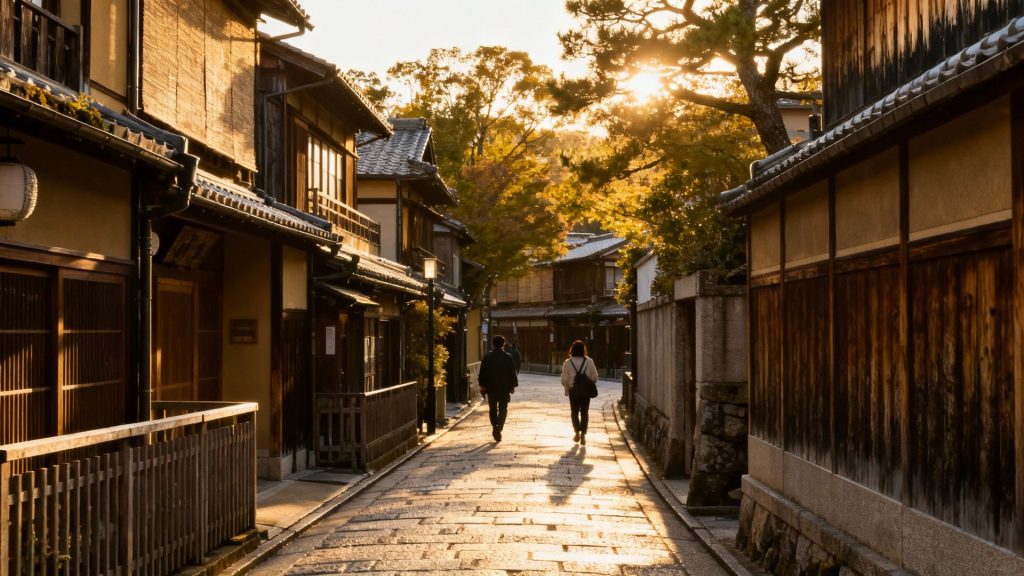
As the hours and seasons shift, Kyoto transforms—a chameleon of color and mood. Spring bathes the city in cherry blossom pink, a fleeting spectacle of petals drifting like snowflakes, while autumn sets the hills ablaze with maple reds and golds, casting long shadows that deepen the sense of passage. Summer brings lush greens and the hum of cicadas, a vibrant counterpoint to winter’s stillness when temples stand stark against frosted gardens, each phase a reminder of impermanence and renewal. These cycles, observed from a bench overlooking the Kamo River or along lantern-lit streets at dusk, create a rhythm that resonates with our own life’s tides, stirring emotions that linger long after the journey ends.
To fully immerse in Kyoto, engage your senses: listen for the gentle chime of temple bells at sunset, smell the earthy fragrance of wet pine after rain, and feel the cool smoothness of stone pathways underfoot. Wander through Nishiki Market early, where the aromas of grilled mochi and pickled vegetables awaken taste and memory, or pause in a garden to touch the rough bark of a centuries-old tree, grounding yourself in tangible history. Such experiences, free from distraction, anchor the soul in moments of pure presence, turning observation into a personal pilgrimage where every detail becomes a thread in your own narrative.
In the end, Kyoto’s true gift lies not in its vistas but in the quiet dialogue it sparks between traveler and terrain—an invitation to reflect on our own place in the flow of time, where the echoes of footsteps on ancient paths remind us that we are part of something larger. This landscape, with its profound beauty and unspoken wisdom, becomes a vessel for our own stories, leaving us with a sense of peace that transcends the visit, a gentle nudge to carry its lessons homeward.