Whispers of the Past: Meandering Through Kyoto’s Serene Alleys Where Nature and Heritage Embrace
Discover the soul of Japan in Kyoto’s timeless temples and gardens, where every stone path and seasonal bloom invites quiet contemplation, awakening senses to layers of history and natural beauty.
As dawn breaks over Kyoto, the first light kisses the golden facade of Kinkaku-ji, casting shimmering reflections on the still pond below, and the air fills with the soft rustle of maple leaves, transporting you to a world untouched by haste. This ancient capital, cradled by mountains, unfolds like a living scroll, where the scent of incense from distant shrines mingles with the earthy aroma of moss-covered stones, creating an immediate immersion into a realm of tranquility. Here, the city’s heartbeat is felt not in crowds, but in the silent dialogue between centuries-old architecture and the whispering winds, urging you to pause and absorb the profound stillness that defines this sacred landscape.
At the heart of Kyoto lies Arashiyama’s bamboo grove, a cathedral of green where towering stalks sway in unison, their slender forms creating dappled shadows that dance on the forest floor. Walking these paths, the crunch of gravel underfoot echoes like a gentle percussion, while sunlight filters through the canopy, illuminating the intricate textures of bark and leaf. This natural sanctuary, free from modern intrusions, embodies the Japanese principle of harmony with the environment—each bamboo shoot standing as a testament to resilience, its growth shaped by the seasons and the patient hands of tradition. The grove’s simplicity speaks volumes, evoking a sense of continuity that connects visitors to the land’s enduring spirit.
Kyoto’s essence is distilled in its Zen gardens, such as Ryoan-ji’s karesansui, where raked gravel swirls around carefully placed rocks, mimicking ocean waves frozen in time. This minimalist art form, born from Buddhist meditation practices, invites introspection without words; the patterns shift with the angle of light, revealing new perspectives on impermanence and balance. Nearby, the tea houses of Uji embody the wabi-sabi philosophy, their weathered wood and asymmetrical designs celebrating the beauty of decay and authenticity. These spaces, devoid of ornamentation, teach that true luxury lies in mindful presence, where the ritual of preparing matcha becomes a bridge to understanding the local reverence for simplicity and the passage of time.
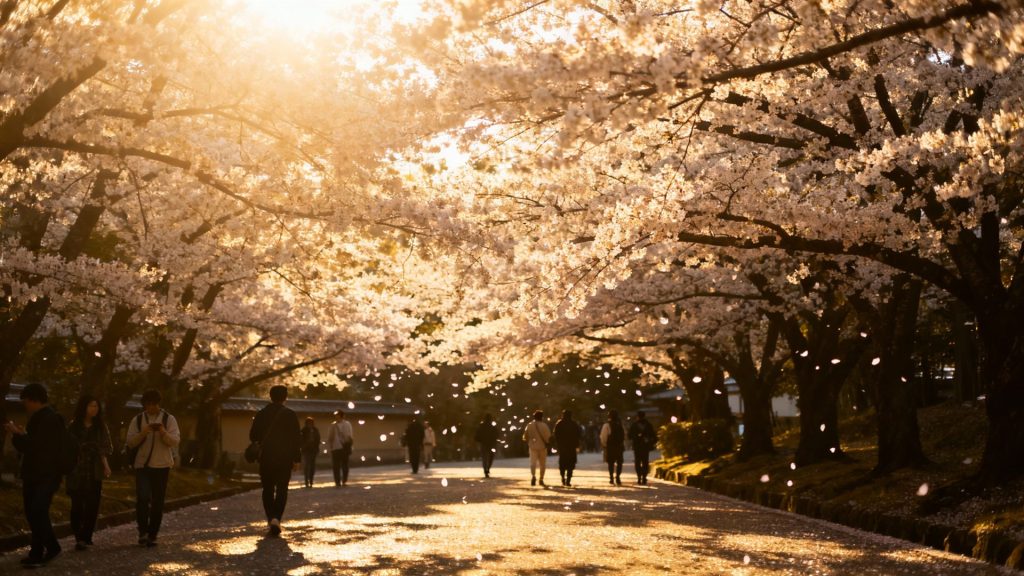
As seasons turn, Kyoto transforms: spring cloaks the city in cherry blossoms, their delicate pink petals cascading like confetti along the Philosopher’s Path, while autumn ignites the hillsides in fiery reds and golds, particularly at Kiyomizu-dera, where the temple’s wooden stage overlooks a kaleidoscope of maples. At dusk, the lanterns of Gion district glow softly, casting long shadows that deepen the sense of history, and in winter, snow blankets the gardens, muffling sounds and amplifying the purity of stone structures. These cyclical changes are not mere spectacles but living narratives, each phase a reminder of nature’s rhythms and the city’s ability to adapt, preserving its charm through centuries of change.
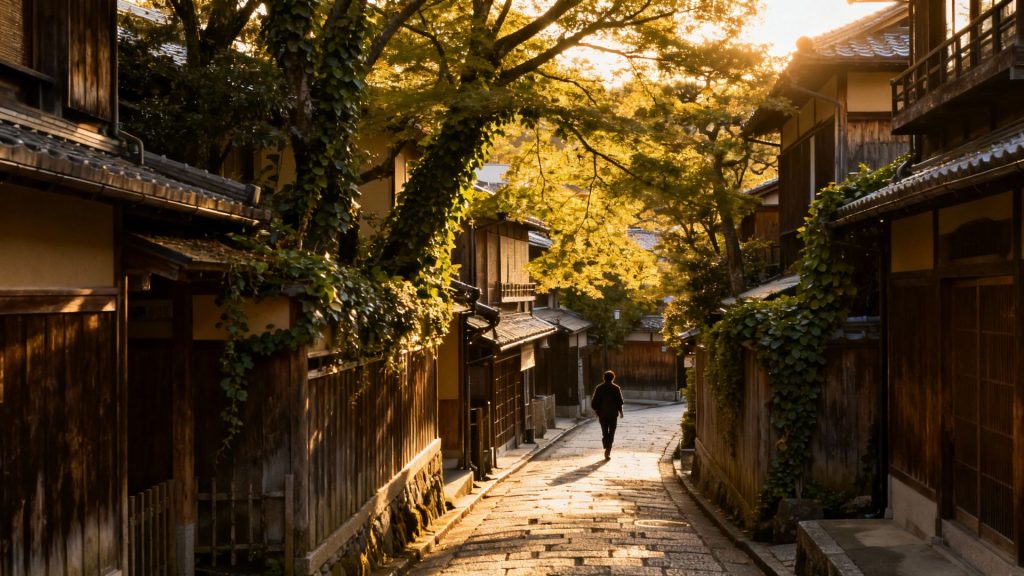
To fully engage with Kyoto, wander slowly: let your feet guide you through narrow alleys of Higashiyama, where the texture of cobblestones under soles and the distant chime of temple bells heighten awareness. Pause at a quiet garden bench, inhale the subtle fragrance of camellias, and listen to the murmur of streams in Shosei-en—these sensory details anchor the experience, turning observation into participation. Practical immersion means rising early to avoid crowds, allowing the morning mist to enhance the mystique, or visiting in late afternoon when the fading light paints landscapes in warm hues, making every step a personal journey of discovery.
Kyoto ultimately reveals that travel is not about destinations, but about the silent conversations we have with places; here, the act of walking becomes a meditation, where each turn unveils layers of memory and meaning. In this city, you are not merely an observer but a participant in an eternal dance between humanity and nature, leaving with a quiet reverence that lingers long after departure, a testament to the power of landscapes to shape our inner worlds.