Where Moss-Covered Paths Whisper: Kyoto’s Gardens as Silent Archivists of Time
Delve into how the interplay of ancient temples, tranquil ponds, and seasonal foliage crafts a landscape that mirrors the quiet echoes of your own memories, inviting introspection.
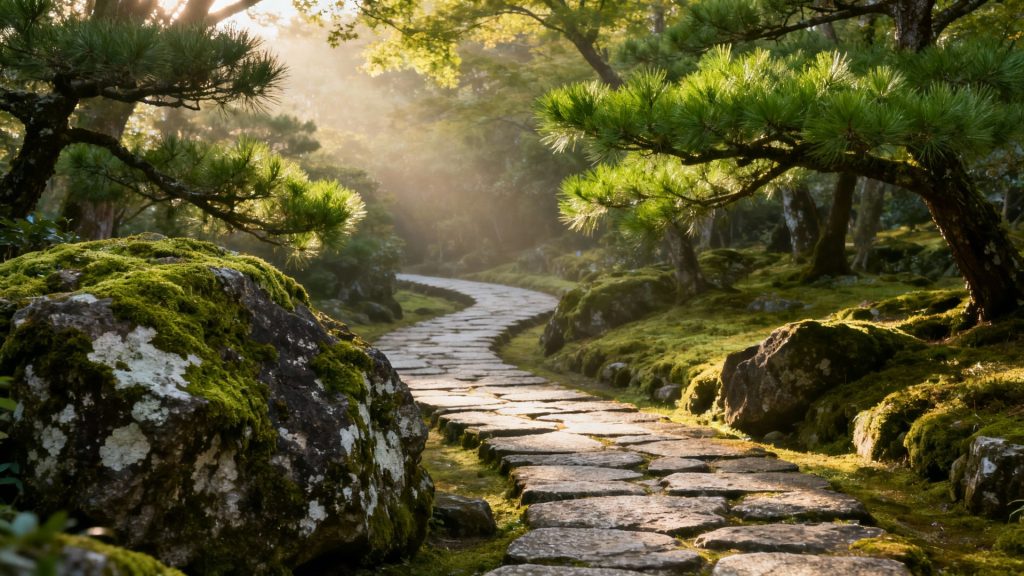
As dawn breaks over Kyoto, the first light spills across the mossy stones of Ryoan-ji Temple, casting long shadows that dance like forgotten thoughts. The air hums with the scent of damp earth and pine, a sensory overture that pulls you into a world where time slows to the rhythm of rustling leaves. Here, amidst the silent courtyards, the city awakens not with clamor but with a hushed reverence, as if the very stones breathe centuries of untold stories. Step onto the gravel paths of Karesansui gardens, where raked patterns mimic ocean waves frozen in meditation, and you are not just a visitor but a participant in an ancient dialogue between nature and human spirit. The morning mist clings to the vermilion gates of Fushimi Inari, their endless arcades stretching like a red thread through the forest, each torii a portal that holds the weight of countless wishes. This opening moment captures Kyoto’s essence: a city that doesn’t shout its history but allows it to seep into your bones through subtle, evocative details that stir a deep, personal recognition.
At the heart of Kyoto’s allure lies its core landscapes, where natural grandeur intertwines with human artistry. Kiyomizu-dera Temple perches on wooden stilts above a verdant valley, offering panoramic views that stretch to distant mountains, while the reflection of golden Kinkaku-ji shimmers in its mirroring pond, creating a duality of sky and water. Walk through the Arashiyama Bamboo Grove, where towering stalks sway in symphony, their rustle a gentle percussion that masks the world outside, and you feel enveloped in a living cathedral of green. Along the Philosopher’s Path, cherry blossoms or maple leaves canopy the canal, depending on the season, their fleeting beauty a reminder of impermanence celebrated in every brushstroke of Japanese art. These scenes are not mere sights; they are curated experiences that require no narration to evoke a sense of continuity, as if the mountains and rivers have witnessed eras pass and now share their silent wisdom with those who pause to listen.
Kyoto’s soul emerges in its cultural tapestry, where Zen principles and Shinto traditions infuse every corner with profound simplicity. The meticulous rock arrangements in Daitoku-ji’s gardens symbolize islands in a sea of gravel, inviting contemplation on the balance between chaos and order, a metaphor for life’s ephemeral nature. Traditional machiya townhouses, with their wooden lattices and earthen walls, adapt harmoniously to the hills, their design minimizing footprints while maximizing light and airflow. In the quiet of tea houses, the ritual of matcha preparation becomes a meditation, each deliberate movement reflecting a philosophy of mindfulness that transcends words. This isn’t folklore but a living heritage where architecture and ritual are dialogues with the environment, fostering a resonance that connects to universal human experiences. The absence of grand narratives allows the land itself to speak, its textured silence awakening a collective nostalgia for places we’ve never been but feel intimately known.
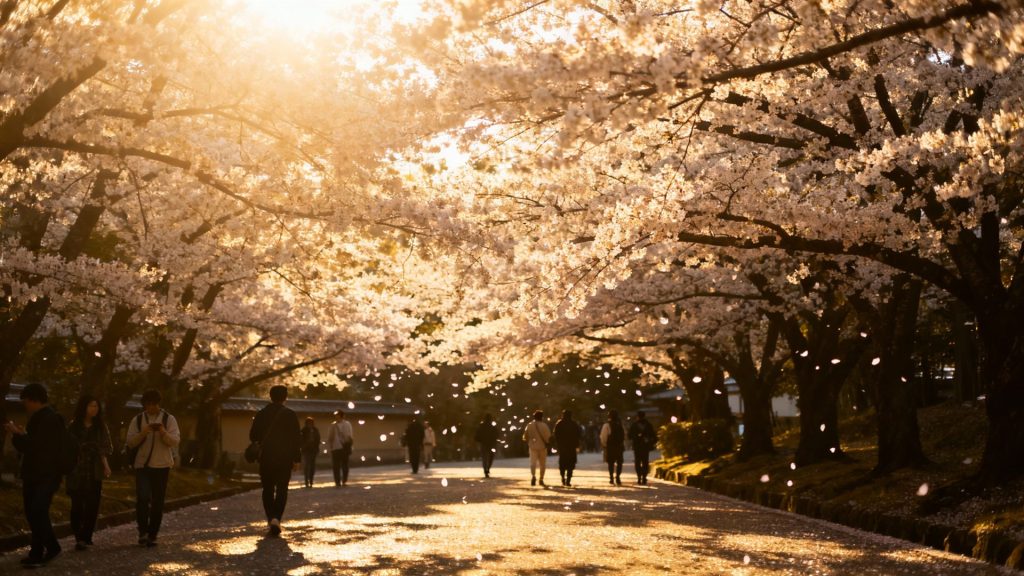
Transformations across the year reveal Kyoto’s dynamic character, painting the city in shifting palettes that mirror the passage of memory. In spring, the sakura blooms burst in clouds of pink along the Kamo River, their petals drifting like snowflakes in a ephemeral spectacle that evokes the transient joy of youth. Summer brings emerald hues to moss gardens, where raindrops bead on leaves, creating a cool, verdant sanctuary that whispers of renewal. Autumn ignites the hillsides in fiery reds and golds, especially at Tofuku-ji, where maples blaze against stone bridges, and the crisp air carries the scent of fallen leaves—a vivid chapter that stirs reflections on change and resilience. Winter cloaks the temples in snow, their stark beauty enhanced by silver frost, as lanterns glow softly in early dusk, casting long shadows that deepen the silence. Each season is a brushstroke in a living canvas, inviting visitors to witness how time reshapes the landscape, subtly cueing emotions of return and remembrance without overt sentiment.
To engage with Kyoto is to enter a shared, philosophical journey where the traveler becomes part of the scenery. Walking the cobbled lanes of Gion at twilight, past shuttered teahouses and lantern-lit alleys, you might find yourself reflecting on how personal histories intersect with these timeless spaces, as if the city holds a mirror to your inner wanderings. It encourages not just sightseeing but a slowing of pace—a silent conversation where the crunch of gravel underfoot or the distant chime of temple bells anchors you in the present while nudging forgotten dreams. This interaction transcends the physical; it’s a dance between observer and observed, where the landscape’s quiet endurance fosters a sense of belonging. In this way, Kyoto offers more than escape; it becomes a vessel for introspection, reminding us that travel’s true gift lies in uncovering fragments of ourselves within the world’s enduring tapestries.