Stepping into Silence: Kyoto’s Bamboo Groves and the Language of Old Stones
Where Ancient Shrines and Rustling Canopies Merge Past Whispers with Present Footfalls, Awakening Forgotten Echoes
The first light of dawn creeps over Fushimi Inari Shrine, painting the endless torii gates in hues of fiery crimson and gold. Mist curls around stone foxes guarding the path, softening the edges of countless vermilion arches that climb into the hills. A hush falls as dew glistens on moss-covered steps, and the air carries the faint scent of damp earth and incense. This is not merely a scene; it is an immersion, where the weight of centuries presses gently on the soul. Here, in the quiet before the crowds, Kyoto casts a spell that bypasses words, reaching straight into the reservoir of memory. The rustle of a breeze through the bamboo groves nearby stirs something ancient within, an unspoken nostalgia that emerges not from description, but from the very stones and shadows themselves.
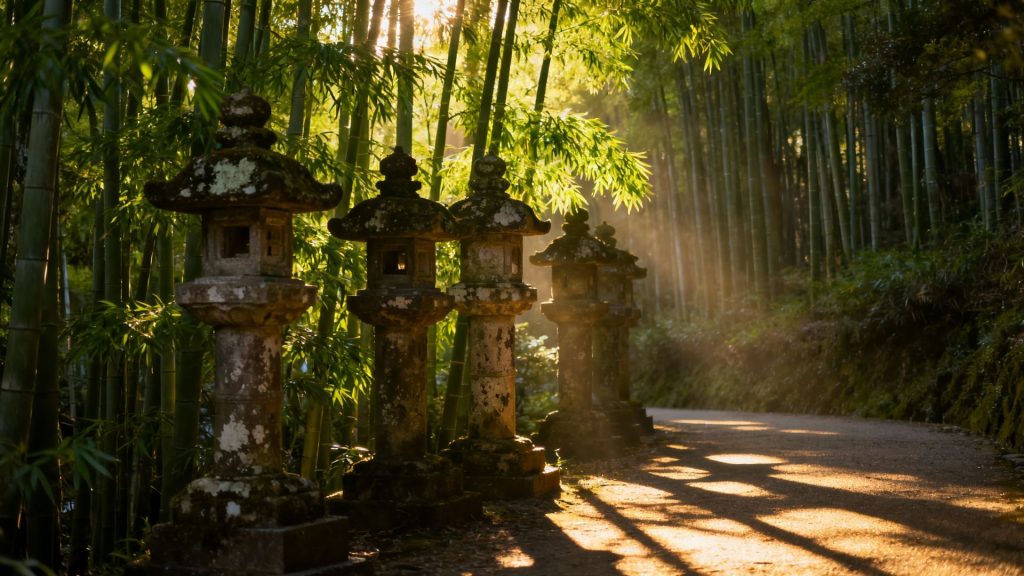
Venture deeper into Arashiyama’s emerald corridors, where towering bamboo stalks stretch skyward, their slender forms swaying in rhythm to an invisible symphony. Sunlight filters through the canopy, dappling the forest floor with patterns that shift like liquid silver. Each step on the packed earth path echoes softly, accompanied only by the creak of bamboo and the distant murmur of a stream. The landscape is a study in balance: nature’s wildness tamed into geometric harmony, yet never subdued. Nearby, Kinkaku-ji’s golden temple reflects perfectly in the still pond, its glow mingling with autumn maples or spring cherry blossoms. This interplay of light and structure evokes a profound stillness, a visual poetry that speaks to the senses before the mind can articulate it, inviting reflections on life’s fleeting beauty.
Human hands have shaped this land for millennia, yet the spirit remains rooted in Shinto reverence and Zen philosophy. Gardens like those at Ryoan-ji are not mere adornments but meditations in stone, where raked gravel swirls symbolize ocean waves and islands of rock anchor contemplation. Each moss-covered rock and pruned pine is placed with intention, reflecting a belief in harmony between humanity and the elements. Temples stand as guardians of history, their wooden beams weathered by time, whispering tales of impermanence through every crack and grain. This is a place where rituals like tea ceremonies are performed in simple tearooms, transforming mundane acts into spiritual journeys. The quietude fosters introspection, allowing the landscape to reveal layers of cultural depth that resonate with universal longing for meaning and connection.
As hours unfold into days, Kyoto reveals its ever-shifting moods. At sunset, the Philosopher’s Path along the canal ignites with fiery hues, as lanterns flicker to life beside weeping willows, casting long shadows over cobblestones. Come winter, snow blankets stone lanterns and temple roofs, muffling sounds into a crystalline silence that amplifies the crunch of footsteps. Spring brings cherry blossoms in explosive pink blooms, their petals drifting like confetti to carpet streams, while autumn sets forests ablaze with maple reds and oranges. These transformations are not superficial; they echo the passage of seasons in our own lives, stirring memories of childhood awe or quiet moments lost to time. The city becomes a canvas where light and shadow dance, reminding us that beauty lies in the ephemeral.
To fully absorb Kyoto’s essence, engage your senses with intention. Walk barefoot across cool moss in temple courtyards, feeling the earth’s pulse beneath your soles. Pause beside a quiet pond to listen—the plop of a koi fish breaking the surface, the distant chime of a temple bell carried on the breeze. Inhale deeply at a shrine, where the smoky aroma of incense mingles with the sweet perfume of plum blossoms. Taste the simplicity of matcha served in a rustic bowl, its bitterness balanced by the surroundings’ serenity. This is not a checklist but a practice: slow down, observe, and allow the colors, textures, and sounds to seep into your awareness. Such sensory immersion awakens dormant recollections, linking past wanderings with present discoveries.
In the end, a journey through Kyoto is less about seeing and more about remembering—a dialogue between traveler and terrain where every stone path and bamboo whisper becomes a mirror. The city’s quiet grace challenges us to confront our own fleeting existence, its timeless landscapes offering solace in transience. As you depart, the echoes linger: the rustle of leaves, the cool touch of stone, the golden light on water. These are not just sensations; they are keys unlocking chambers of personal history, inviting reflections on where we’ve been and where we’re bound. Here, in the heart of the old capital, nature and human craft converge to create not just a destination, but a sanctuary for the soul, where the past breathes through the present, forever whispering, “Remember.”